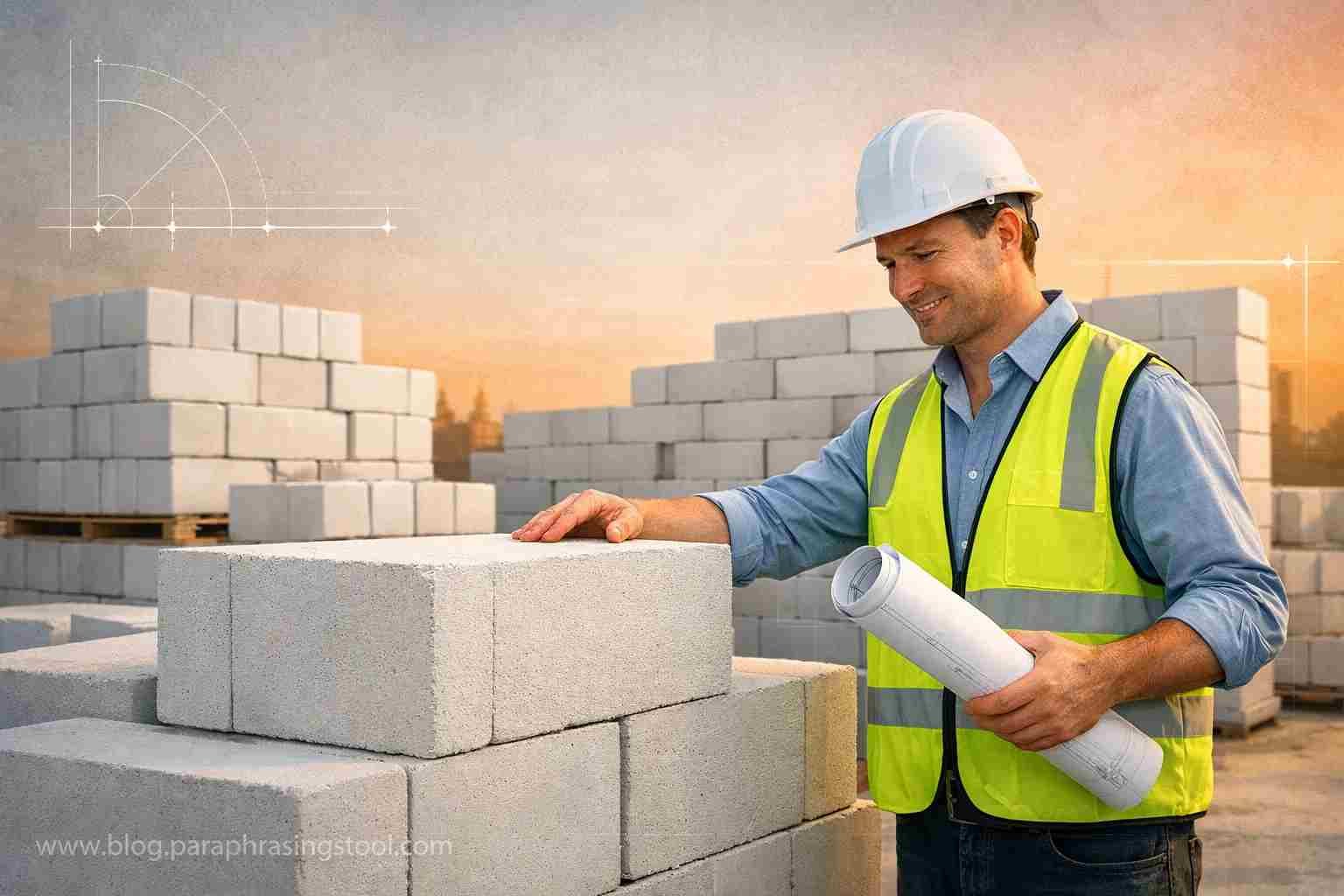
If you’re comparing materials for a house, extension, or renovation, this guide will explain exactly what beton celular autoclavizat is, why it matters, and when it works best.
Quick Facts You Should Know
| Feature | Detail |
|---|---|
| English Name | Autoclaved Aerated Concrete (AAC) |
| French Name | Béton cellulaire |
| Density | Much lighter than traditional concrete |
| Insulation | High thermal performance |
| Fire Resistance | Excellent |
| Typical Uses | Walls, partitions, slabs, insulation layers |
| Price Factor | Higher per block, lower overall labour cost |
| Common Add-on | Sapa beton celular (lightweight screed) |
What Is Beton Celular Autoclavizat?
Beton celular autoclavizat, often shortened to BCA or AAC, is a precast construction material formed with millions of tiny air bubbles inside. These air pockets reduce weight while improving insulation.
Here’s the key fact:
Beton celular autoclavizat combines structural strength with insulation in one single material.
In practical construction projects, this means fewer extra layers are needed for thermal performance. Builders who switch to AAC often notice easier transport, faster wall assembly, and less structural load on foundations.
Unlike standard concrete, which is dense and heavy, this material is engineered to be lighter without sacrificing durability.
Why It Matters
When a building is lighter, the foundation requirements decrease. That can reduce overall project cost and structural complexity.
From real-world construction observations, crews can lift AAC blocks manually without heavy machinery in many cases. That changes workflow speed significantly.
Outcome
You get faster builds, improved energy efficiency, and better long-term insulation performance.
Beton Celular Autoclavizat in English
If you search for Beton celular autoclavizat engleza, the correct term is:
Autoclaved Aerated Concrete (AAC).
You’ll also see it referenced internationally as cellular concrete or aerated concrete.
The important distinction is that AAC is factory-produced and steam-cured in autoclaves, which increases its strength and consistency.
Not all “light concrete” is AAC. The autoclave curing process is what makes it structurally reliable.
How Is It Made?
Understanding production helps explain performance.
Definition
Beton celular autoclavizat is made by mixing cement, lime, silica sand, water, and aluminium powder. The aluminium reacts chemically to create air bubbles.
Why It Matters
Those microscopic air pockets are the reason the material is both lightweight and insulating.
Outcome
After curing under high-pressure steam, the blocks become strong, stable, and ready for structural use.
In construction practice, the uniformity of factory-made AAC reduces on-site inconsistencies that sometimes happen with traditional concrete mixing.
Main Advantages of Beton Celular Autoclavizat
1. Lightweight Structure
AAC can weigh up to three times less than traditional concrete.
A lighter structure means less pressure on foundations and easier transportation.
On real building sites, installers report reduced physical strain when handling these blocks.
2. Thermal Insulation
The trapped air improves heat retention.
In colder climates, this reduces heating costs. In warmer regions, it helps keep interiors cool.
Energy-efficient homes often use AAC for exterior walls specifically for this reason.
3. Fire Resistance
AAC is non-combustible and can withstand high temperatures for extended periods.
This makes it ideal for residential and commercial projects where safety standards are strict.
4. Sound Insulation
The porous structure also helps reduce noise transfer.
Apartments and office spaces benefit from this acoustic advantage.
Beton Celular Usor Pret: Is It Expensive?
Now let’s address pricing.
At first glance, beton celular usor pret may appear higher compared to standard brick.
However, price should never be judged per block alone.
Definition
AAC blocks often cost more individually than clay bricks.
Why It Matters
You use fewer blocks, less mortar, and reduce labour time.
Outcome
Total construction cost can be similar or even lower.
From contractor experience, labour savings and faster wall completion often offset the initial material price.
If your project prioritises speed and insulation, AAC becomes cost-effective long-term.
Sapa Beton Celular: What Is It?
Sapa beton celular refers to lightweight screed made from aerated concrete mixtures.
Definition
It’s a low-density concrete layer used to level floors or add insulation.
Why It Matters
Traditional screed adds significant weight to floors.
Outcome
Lightweight screed reduces load and improves thermal performance.
Builders commonly use it in renovations where structural weight limits are strict.
Where Beton Celular Works Best
This material performs particularly well in:
- Residential houses
- Apartment blocks
- Office partitions
- Energy-efficient buildings
- Renovation projects
In projects where insulation regulations are strict, AAC simplifies compliance.
When Beton Celular Is Not Ideal
Balanced advice matters.
Beton celular autoclavizat is not always the best choice.
It may not be suitable for:
- High-impact industrial floors
- Heavy load-bearing foundations without reinforcement
- Areas requiring extreme compressive strength
A common mistake is assuming AAC can replace reinforced structural concrete everywhere. It cannot.
Use it for walls and partitions, not heavy structural footings unless engineered properly.
Common Mistakes That Increase Costs
1. Incorrect Mortar Usage
AAC requires thin-bed mortar for best results.
Using standard thick mortar reduces thermal efficiency.
2. Poor Cutting Tools
Blocks should be cut with proper tools to maintain clean edges.
3. Ignoring Moisture Protection
Although durable, external walls still require finishing and waterproof protection.
Comparing Beton Celular vs Traditional Brick
| Feature | AAC | Traditional Brick |
|---|---|---|
| Weight | Lightweight | Heavy |
| Insulation | High | Moderate |
| Installation Speed | Faster | Slower |
| Structural Load | Lower | Higher |
| Fire Resistance | Excellent | Good |
The key difference lies in insulation and weight.
Builders working on modern energy-efficient homes increasingly choose AAC because it reduces the need for extra insulation layers.
Environmental Impact
Beton celular autoclavizat is considered more sustainable than traditional concrete.
Definition
It uses fewer raw materials and produces less waste during installation.
Why It Matters
Lower weight reduces transportation fuel consumption.
Outcome
Smaller carbon footprint per project.
In green building certifications, AAC can support energy efficiency goals.
Working With Beton Celular in Renovations
Renovation projects benefit significantly from lightweight materials.
When reinforcing old buildings, adding heavy brick walls may overload existing foundations.
AAC reduces that risk.
Professionals often recommend it when structural reinforcement is limited.
Is Beton Celular Durable?
Yes, when installed correctly.
AAC structures across Europe have been standing for decades.
Durability depends more on correct installation and finishing than on the core material itself.
A well-installed AAC wall can last as long as traditional masonry.
Installation Overview
Installation follows a structured process:
- Level foundation
- Apply thin mortar layer
- Place blocks precisely
- Reinforce where required
- Apply finishing layers
The key advantage is block size. Larger blocks mean fewer joints and faster wall assembly.
Frequently Asked Questions
Is beton celular autoclavizat strong enough for houses?
Yes. It is widely used in residential construction for load-bearing walls.
Is it waterproof?
It resists moisture but still requires external finishing.
Does it crack easily?
Not when installed correctly. Proper reinforcement prevents cracking.
Is it better than brick?
It depends on your priorities. For insulation and speed, yes. For extreme compressive loads, traditional reinforced concrete may perform better.
Who Should Use It?
This material is ideal for:
- Homeowners building energy-efficient houses
- Contractors seeking faster build times
- Renovation projects with weight limits
It may not be ideal for heavy industrial foundations without engineering reinforcement.
Final Takeaway
Beton celular autoclavizat is a lightweight, energy-efficient building material that simplifies construction while improving insulation and fire resistance. It is not a universal replacement for all concrete types, but for walls and partitions, it delivers clear structural and economic advantages.
If your goal is faster construction with better thermal performance, this material deserves serious consideration.
Choose based on project needs, not just block price — and you’ll make a smart building decision.

Alex WebPro, your guide to web mastery. Expert tips on WordPress, SEO, monetization, and the best in design trends and themes.