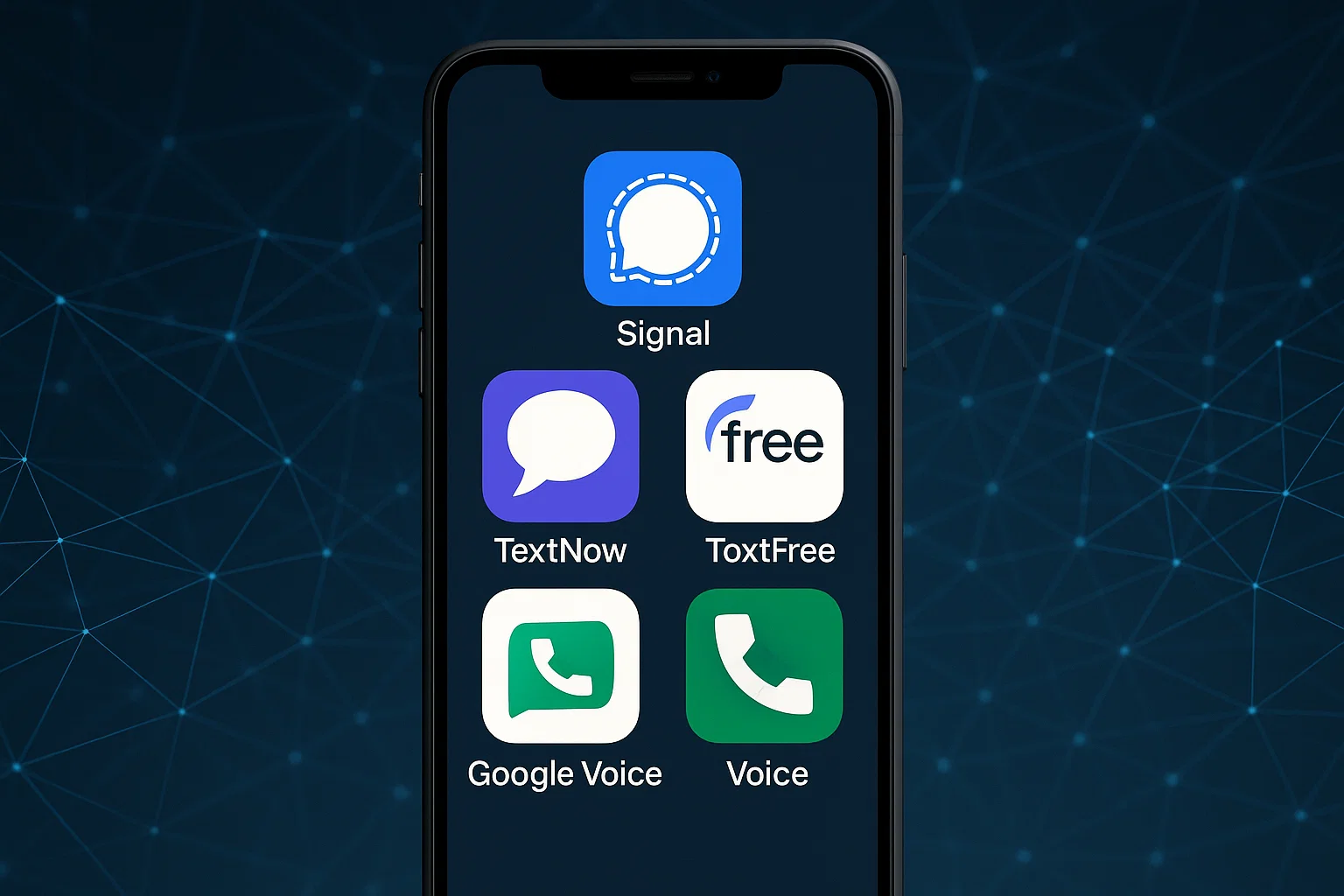
Let’s pull back the curtain and see what’s really going on.
What Is Onvoy Spectrum, Exactly?
Before we list the texting apps that use it, you’ve got to understand what Onvoy Spectrum actually is.
Onvoy (now part of a bigger telecom network called Inteliquent) is a Voice over Internet Protocol (VoIP) carrier. Think of it as the invisible phone company that gives phone numbers to digital apps. Instead of your SIM card or local carrier, Onvoy assigns virtual numbers that live online.
Spectrum, in this context, refers to a subdivision or routing label within Onvoy’s vast telecom network. Together, Onvoy Spectrum powers the back-end for countless texting and calling apps.
So when you see “Onvoy, LLC” or “Onvoy Spectrum, LLC” in a reverse lookup, that number probably came from a VoIP-based texting app rather than a regular mobile network.
Here’s what matters:
- Onvoy Spectrum doesn’t make the apps.
- It provides the telephone infrastructure those apps rely on.
- Many free or low-cost texting services use it to assign disposable or alternative numbers to users.
Why Do Texting Apps Use Onvoy Spectrum?
Because it’s cheap, reliable, and scalable. Period.
When a developer builds a messaging app, they need thousands (sometimes millions) of phone numbers to assign to users. Buying those directly from mobile carriers like AT&T or T-Mobile would cost a fortune. Onvoy Spectrum steps in to provide bulk VoIP numbers that apps can rent and manage through APIs.
Here’s why apps choose Onvoy Spectrum over others:
- Cost Efficiency: Bulk VoIP numbers cost pennies compared to traditional telecom rates.
- Nationwide Coverage: Onvoy Spectrum supplies numbers in all 50 U.S. states.
- Instant Activation: Numbers can be created or deactivated on demand.
- Anonymity: Perfect for users who don’t want to reveal their personal numbers.
- SMS Compatibility: These VoIP lines can send and receive texts like a real phone.
In short, Onvoy Spectrum is like the plumbing system that keeps these apps connected to the rest of the phone network.
The Most Common Texting Apps Using Onvoy Spectrum
Here’s where it gets interesting. Several popular and lesser-known texting apps rely on Onvoy Spectrum to handle SMS and calling. Some are legitimate; others are used anonymously or even for spam. Let’s look at the most common ones.
1. TextNow
One of the biggest users of Onvoy Spectrum. TextNow provides free texting and calling through Wi-Fi, assigning each user a VoIP number (often registered under Onvoy).
- Offers free unlimited texting in the U.S. and Canada.
- Frequently appears in reverse phone lookups as “Onvoy Spectrum.”
- Users can create multiple numbers or replace their number anytime.
If you’ve ever received a text that feels automated or out-of-state, there’s a good chance it came through TextNow.
2. TextFree (by Pinger)
Another well-known app offering free texting and calling over data. TextFree also uses Onvoy Spectrum for routing.
- Great for users who want a second line.
- Commonly used for temporary verification or business chat lines.
- Messages come from random area codes, depending on Onvoy’s available numbers.
3. Sideline
Sideline targets professionals who need a second number for work. It’s more polished than TextNow and integrates with mobile contacts seamlessly.
While it markets itself as “business-class,” the infrastructure behind it still runs on Onvoy Spectrum’s VoIP system, giving it the flexibility to scale fast.
4. Google Voice
Yes, even Google Voice numbers sometimes route through Onvoy Spectrum or related VoIP carriers, depending on region. Google uses multiple backend providers for its call and text services, and Onvoy has historically been one of them.
That’s why a Google Voice number might appear as “Onvoy Spectrum LLC” in some databases.
5. OpenPhone
A business texting and calling platform built for startups and remote teams. OpenPhone often leases blocks of Onvoy Spectrum numbers to provide local U.S. coverage.
It’s more premium, but the same network logic applies the app is just a fancy front end for Onvoy’s telecom infrastructure.
6. Burner App
As the name implies, Burner gives you temporary disposable numbers. Many of those come directly from Onvoy Spectrum’s VoIP pool.
Used by people who want privacy during online sales, dating, or verification processes.
7. Hushed
Similar to Burner, Hushed offers secondary phone numbers that operate over Wi-Fi. Again, these numbers are often linked to Onvoy Spectrum, especially in the U.S. and Canada.
Hushed markets privacy and anonymity, which is exactly the kind of flexibility Onvoy’s system provides.
8. TextMe / TextMe Up
Both apps run from the same developer and rely on VoIP routing. Onvoy Spectrum provides a big share of their number assignments. Users can send free messages to U.S. numbers and even make low-cost international calls.
These are popular among students and people travelling abroad who still want a U.S. number.
9. Dingtone
A VoIP and texting hybrid app. It offers cheap calling credits and free texting. Like others, Dingtone sources numbers through Onvoy Spectrum for most U.S. regions.
If you get a text that looks like it’s from a VoIP provider, Dingtone could be the source.
10. TextPlus
An older app, still active and running with Onvoy-powered VoIP numbers. TextPlus is used mainly for Wi-Fi messaging and free texting to mobile numbers in North America.
It’s lightweight and often used by people who’ve ditched SIM cards entirely.
Are These “Secret” Texting Apps?
Not really but they can look secret.
Most of these apps are available on the App Store or Google Play. The reason they feel secretive is because they let users hide behind alternate numbers. That’s not illegal, but it can be misused.
So if you’re wondering, “What do secret texting apps look like?” they look completely normal. Apps like TextNow, TextFree, or Hushed don’t scream secrecy; they just provide anonymity.
You’ll usually spot them by these signs:
- The messages come from a VoIP number, not a mobile carrier.
- Calls or texts might not work with verification systems like WhatsApp.
- The number may change frequently.
- Reverse lookup tools often show “Onvoy Spectrum” or “Bandwidth.com.”
How to Tell If Someone Is Using a Texting App
If you’ve got a text and you’re curious whether it came from a real phone or an app, here’s how you can tell.
- Run a reverse phone lookup.
Use sites like TruePeopleSearch, Spokeo, or Whitepages. If the result says “Onvoy Spectrum LLC,” it’s a VoIP number. - Check the area code.
VoIP numbers often use random area codes not tied to the person’s actual location. - Test with verification services.
Try adding the number to WhatsApp or Signal. If it doesn’t register, it’s likely app-based. - Look for message tone.
Automated or copy-paste messages are common signs of temporary texting app usage. - Ask directly.
Sometimes the simplest way is the most effective. Many users don’t hide it they just prefer privacy.
Can You Text With a VoIP Number?
Absolutely. That’s the whole point.
VoIP numbers function like normal phone numbers for SMS and MMS. The only difference is that they work over the internet instead of cell towers.
Here’s how it breaks down:
| Feature | Mobile Number | VoIP Number (Onvoy Spectrum) |
|---|---|---|
| Texts | Standard SMS | Internet-based SMS |
| Calls | Cellular Network | Wi-Fi / Data |
| Location | Fixed to SIM card | Random / Assignable |
| Anonymity | Low | High |
| Portability | Moderate | Very High |
So yes, you can text anyone with a VoIP number it just happens through Onvoy’s data routes instead of your carrier’s.
Why Onvoy Spectrum Numbers Raise Privacy Questions
Because they’re not tied to one identity.
Traditional carriers require identity verification and SIM registration. Onvoy Spectrum numbers, however, can be created and discarded easily, which makes them useful for privacy and sometimes abuse.
That’s why you’ll find these numbers popping up in:
- Online marketplace chats (Craigslist, Facebook Marketplace)
- Dating apps
- Temporary verification sites
- Anonymous texting services
It’s not inherently shady people just want privacy. But yes, scammers sometimes exploit that same feature.
The Difference Between Onvoy and Other VoIP Providers
You might see similar names like Bandwidth.com, Twilio, or Level 3 Communications in phone lookups.
Here’s how Onvoy Spectrum compares:
| Provider | Primary Use | Strength |
|---|---|---|
| Onvoy Spectrum | App-based texting & calling | Massive U.S. coverage |
| Bandwidth.com | Business communications | Strong API support |
| Twilio | Developer-friendly SMS API | Global reach |
| Level 3 | Enterprise telecom | Infrastructure backbone |
Onvoy sits right in the middle perfect for developers building apps that need millions of numbers fast.
Can You Find Out Which App Sent a Text?
Not precisely, but you can narrow it down.
While you can’t always know which exact app sent the message, you can gather clues:
- If the number starts with Onvoy Spectrum, it’s from a VoIP source.
- The format and behaviour of the messages can reveal the type (e.g., short code = automated service).
- Some lookup tools offer tags like “TextNow user” or “Pinger VoIP.”
But unless the app itself identifies the sender, you’ll rarely find the specific name through public lookup alone.
How to Protect Yourself from Spam or Misuse
If you keep getting unwanted texts from Onvoy Spectrum numbers:
- Block the number.
Your phone’s built-in blocking feature works fine. - Report to your carrier.
Some networks forward spam reports directly to the FCC database. - Use spam filter apps.
Apps like Hiya or Truecaller identify VoIP sources automatically. - Don’t click suspicious links.
Especially if the message looks like a delivery or bank notice. - Avoid replying “STOP” to unknown VoIP numbers it just confirms your number is active.
Are Onvoy Spectrum Numbers Legal?
Yes, 100%. They’re legitimate, regulated by the Federal Communications Commission (FCC) in the U.S.
VoIP numbers only become a problem if someone uses them for fraud or harassment. The technology itself is neutral it’s how people use it that matters.
Businesses, freelancers, and remote workers use Onvoy-powered apps every day for privacy and convenience.
When Using These Apps Makes Sense
Onvoy Spectrum-based apps can be extremely handy when used responsibly. Here are some good use cases:
- Keeping business and personal communication separate.
- Signing up for online services without exposing your real number.
- Travelling internationally while staying connected via Wi-Fi.
- Running small-business customer support lines cheaply.
So, the same system that spammers exploit also helps millions communicate affordably.
Final Thoughts
Now you know what texting apps use Onvoy Spectrum and more importantly, why.
Apps like TextNow, TextFree, Sideline, Google Voice, OpenPhone, Hushed, and Burner all rely on this invisible VoIP network to hand out virtual numbers to users across the U.S.
Next time you get a mysterious text, don’t panic. It’s not necessarily a scam. It could just be someone using a free texting app to reach you without sharing their real number.
Still, always stay alert. Treat unknown messages the same way you’d treat unknown links. And if you’re looking to understand tech, tools, and online communication better, keep exploring guides like this they’ll help you make sense of the hidden systems powering your everyday apps.

Alex WebPro, your guide to web mastery. Expert tips on WordPress, SEO, monetization, and the best in design trends and themes.