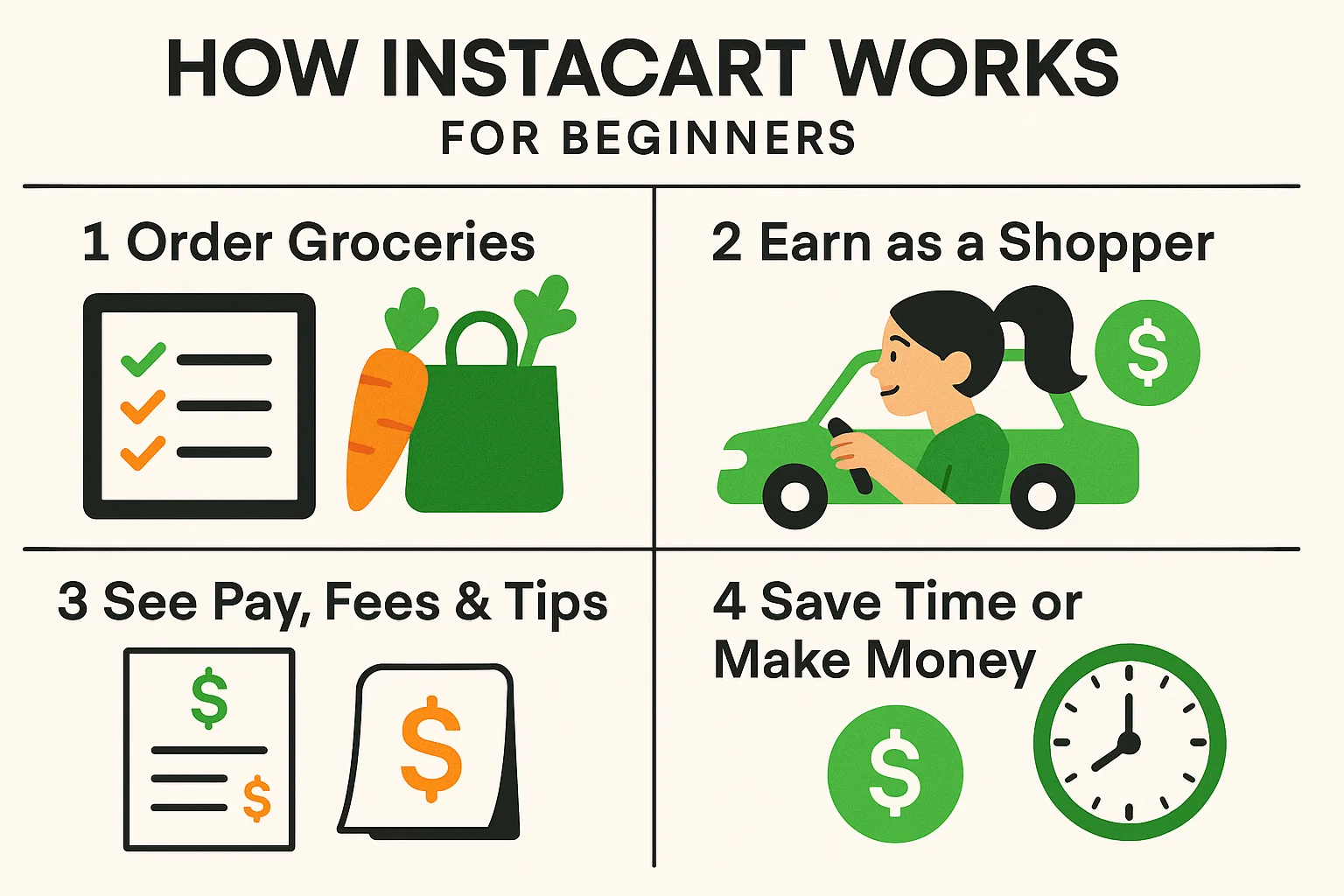
If you’re curious whether you can earn with it, or you just want to skip that checkout line without losing your mind, this guide has everything from how to start, what it costs, what shoppers really earn, and even the hidden bits most people don’t talk about.
So grab a cup of tea (or coffee if you’re an early riser), and let’s unpack Instacart the easy way.
Let’s Start Simple: What Instacart Actually Is
Instacart is basically a bridge between people who want groceries and people who are willing to get them for you.
Think of it as Uber Eats, but instead of restaurant meals, it’s your weekly grocery haul.
You download the Instacart app or go to their website. From there:
- You select your favourite local stores Walmart, Costco, Safeway, Sprouts, Aldi, you name it.
- You add items to your virtual cart, just like online shopping.
- Once you confirm, Instacart assigns a “personal shopper” near you who goes into the store, picks your stuff, and either delivers it to your doorstep or schedules it for pickup.
You can even chat with your shopper if something’s out of stock maybe your “organic avocados” turned into “regular ones.” They’ll ask what you prefer. That back-and-forth chat is surprisingly human and often saves you from random replacements.
When it’s all done, the app notifies you when your order is on its way. You pay everything groceries, service fees, delivery charge, and tip right inside the app.
And voilà, dinner ingredients show up without you even putting on shoes.
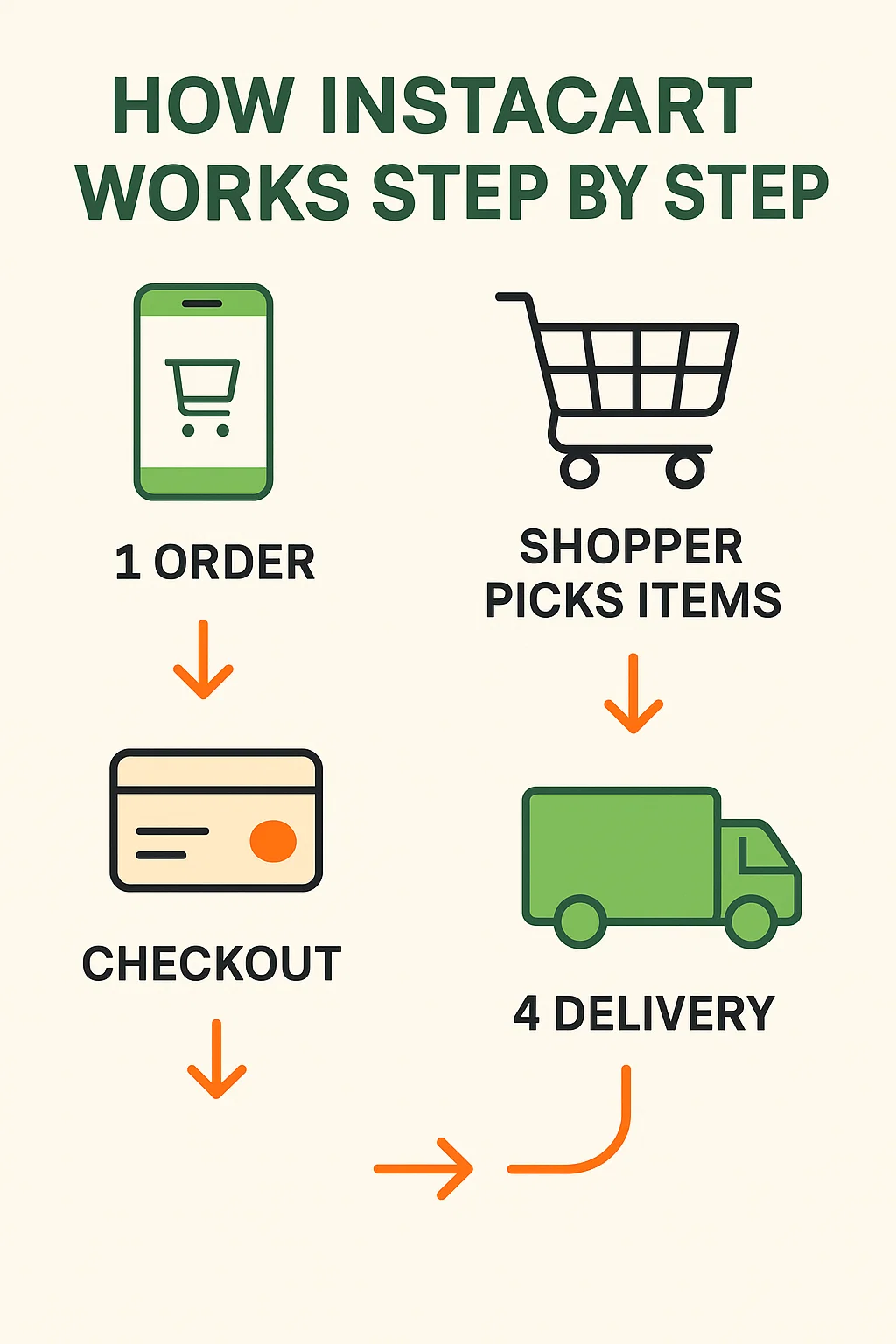
How Instacart Works for Customers (Step-by-Step)
Alright, let’s break it down like you’re ordering for the first time.
Step 1 – Pick Your Store
After signing up, the app shows local stores partnered with Instacart. Not every store participates, but in most major cities, you’ll find big names like Kroger, Costco, or local favourites.
Step 2 – Fill Your Cart
Search for items by name or browse aisles virtually fruits, snacks, toiletries, baby products, you name it. Instacart even remembers what you bought last time, which saves time for repeat orders.
Step 3 – Review and Checkout
When your cart’s full, you review the total. You’ll see:
- Item prices (some slightly marked up from in-store prices).
- Service fees (usually around 5–10%).
- Delivery fee (depends on distance and store).
- Optional tip for the shopper.
If you use Instacart+, the delivery fee might be waived (more on that later).
Step 4 – Shopper in Action
Once you place the order, an available shopper claims it. You’ll get a notification like “John has started shopping.” From that point, you can chat live if you want to adjust or approve substitutions.
Step 5 – Delivery or Pickup
You choose whether you want your items brought to your door or prefer pickup. Delivery usually happens in an hour or two, depending on demand.
That’s it. No queues. No parking lot madness.
Instacart Membership & Costs Explained
Let’s talk money because convenience usually comes with a price tag.
Basic Users (Pay-Per-Order)
If you use Instacart occasionally, you’ll pay:
- Delivery fees (often between $3.99 and $7.99 depending on distance and order size).
- A service fee (usually 5–10%).
- A tip (optional but heavily encouraged and deserved).
Sometimes you’ll also notice prices slightly higher than what you’d see in-store. That’s how Instacart and participating retailers cover logistics and extra labour costs.
Instacart+ Membership (The Premium Plan)
If you’re a frequent user, Instacart+ (previously called Express) might save you money.
You can either pay $9.99/month or $99/year and get:
- $0 delivery fees on orders above a minimum ($10–$35 depending on store).
- Reduced service fees.
- Exclusive discounts.
- Shared benefits with family members (up to two household accounts).
There’s often a free trial, so you can test it out before committing.
The Real Question: Is It Worth It?
If you’re ordering once or twice a week, yes. It’ll probably pay for itself within a month.
But if you only order once in a blue moon say once a month you might just stick with pay-per-order.
How Instacart Works for Shoppers (The Earning Side)
Now let’s flip the script. What if you want to earn instead of spend?
Being an Instacart shopper is basically like running your own small delivery gig. You pick your hours, select the orders you want, and get paid per batch.
There are two main roles:
- Full-Service Shopper – You do everything: shop and deliver. You’ll need a car and a smartphone.
- In-Store Shopper – You only shop; someone else delivers. This role is more limited and often part-time.
Here’s how it flows for full-service shoppers:
- Log in to the Shopper App.
- See “batches” available near you. Each batch shows potential earnings and number of items.
- Accept a batch that fits your schedule.
- Drive to the store, shop for the items (using the in-app list and barcode scanner), and pay using Instacart’s prepaid debit card.
- Deliver the groceries to the customer.
Once completed, your pay for that batch appears in the app.
How Much Do Instacart Shoppers Get Paid?
This question gets asked a lot and for good reason. People want to know if it’s actually worth their time.
The short answer: It depends on location, order size, time of day, and tips.
Here’s the breakdown:
- Base Pay (Batch Pay): Varies but usually between $7–$10 per order, depending on distance, size, and complexity.
- Tips: You keep 100% of what customers tip you (and many customers tip 10–20%).
- Promotions/Bonuses: Instacart sometimes offers “peak pay” or “extra earnings” during busy hours.
On average, many shoppers report earning $15–$25 per hour. Some make more during peak times (weekends, evenings, holidays).
That said, remember your vehicle costs fuel, parking, maintenance all eat into your actual profit.
If you’re in a city with high demand, it can be a great side hustle. But if your area is quiet, you might spend more time waiting than earning.
Can You Really Make $1000 a Week with Instacart?
Yes but it’s not easy.
To make $1000/week, you’d likely need to:
- Work full-time hours (40–50 hours weekly).
- Focus on high-paying batches (big orders, premium stores).
- Shop during busy times (evenings and weekends).
- Have customers who tip well.
Realistically, the average shopper working part-time makes anywhere from $300–$700 per week.
Hitting four figures consistently usually means you’re treating Instacart like a full-time job.
The key is efficiency: knowing your stores, picking the right batches, and managing your driving time smartly.
How Do Instacart Shoppers Pay for Groceries?
Shoppers don’t pay out of pocket. Instacart issues a prepaid debit card linked to your account.
When you shop, you scan and pay using that card the app automatically deducts from the Instacart system, not your wallet.
This keeps things clean: you’re never mixing personal money with business.
Real Talk: Pros & Cons of Using Instacart
Every tech platform has its perks and headaches. Let’s keep it honest.
For Customers
Pros
- You save time no queues, no driving, no grocery carts blocking aisles.
- You can shop from multiple stores at once.
- Track everything in real-time, from “shopping started” to “delivery complete.”
- Support for special requests or substitutions.
Cons
- Prices can be higher than in-store.
- Delivery and service fees add up quickly.
- You depend on your shopper’s judgment for replacements.
- Occasional missing items or damaged goods.
For Shoppers
Pros
- Flexible hours work whenever you want.
- Keep all your tips.
- Potential for steady income if demand is high.
- Easy to start; you just need a car, phone, and background check.
Cons
- Income isn’t stable; it fluctuates weekly.
- Gas and wear-and-tear costs reduce real profit.
- Physical labour lifting heavy groceries, dealing with traffic.
- You depend on good customer ratings to get high-paying batches.
How to Get a Free Instacart Membership (Legit Ways)
Yes, you can actually enjoy Instacart+ without paying full price at least for a while.
- Free Trial – Most new users get a 14-day trial automatically.
- Credit Card Perks – Some banks or premium cards (like Chase Sapphire) occasionally offer 6-month Instacart+ trials.
- Partner Offers – Retailers like Costco or Sam’s Club sometimes include limited free Instacart+ with new memberships.
- Referral Credits – When you refer friends, you often get credits or discounts for your next order.
Always check the app’s Promotions tab new offers pop up regularly.
What Other Apps Are Like Instacart?
Curious how Instacart stacks up against similar apps? Here’s a quick look:
| App Name | Focus | Delivery Fee | Average Pay (Shoppers) | Key Feature |
|---|---|---|---|---|
| Instacart | Groceries | $3.99–$7.99 | $15–$25/hr | Live chat with shopper |
| Shipt | Groceries | $7 flat (varies) | $16–$22/hr | Flat membership model |
| DoorDash | Food + Groceries | Variable | $15–$23/hr | Includes restaurants |
| Amazon Fresh | Groceries | Free with Prime | N/A | Prime integration |
| Walmart+ | Groceries | Free with membership | N/A | Huge store network |
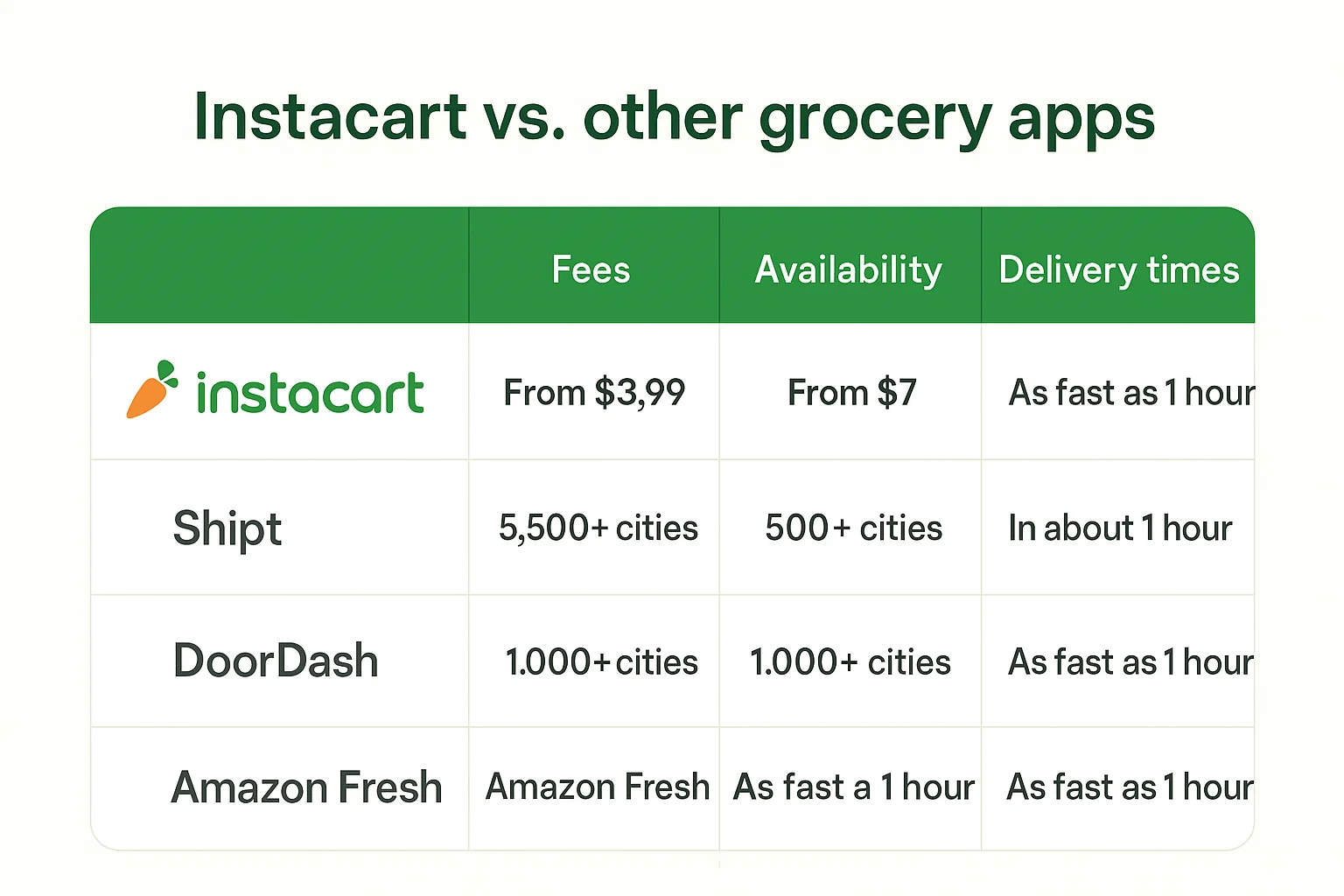
Each has pros and trade-offs.
Instacart shines in store variety and real-time shopper chat, but Shipt often pays more consistently per order.
Quick FAQs
How much do Instacart shoppers get paid per batch?
Usually $7–$10 base + tips. Large or heavy orders pay more.
What’s the downside of Instacart?
Fees for customers, inconsistent pay for shoppers.
How much does it cost to join Instacart?
It’s free to join as a customer, but Instacart+ is $9.99/month or $99/year.
How does Instacart work for beginners?
It’s simple: install app → choose store → order → get delivery. For shoppers: sign up → accept batches → shop → deliver → earn.
How do Instacart shoppers pay for groceries?
They use an Instacart-issued prepaid card (no personal money involved).
Can I make $1000 a week with Instacart?
Yes, but only with full-time effort, peak hours, and consistent tips.
Final Thoughts Is Instacart Worth It?
If you value time more than money, Instacart is a blessing. Grocery runs that once ate up your Saturday morning now happen from your couch.
If you’re looking to earn, it’s a solid side hustle especially if you plan smart, track expenses, and work during high-demand times. Just don’t expect it to replace a full-time income overnight.
Instacart works because it simplifies life for shoppers and buyers alike. But like any modern convenience, you trade a bit of cost for comfort.
The beauty? You get to choose which side of the equation you’re on.

Alex WebPro, your guide to web mastery. Expert tips on WordPress, SEO, monetization, and the best in design trends and themes.